NexaLab Scientific builds tandem quadrupole mass spectrometry and modular liquid
chromatography platforms for laboratories where the answer has to hold up —
in a regulated dossier, a clinical report, or a forensic exhibit.
Engineered as a single instrument. Supported for a decade.
NexaLab Scientific manufactures liquid chromatography and mass spectrometry systems
for quantitative and qualitative analysis, and operates bioanalytical laboratory
services on the same platforms. Across a decade of instrument development
we have maintained a single design principle: the ion optics, the fluidics and the
data system are engineered as one integrated platform, rather than assembled from
independently sourced modules.
Our development priorities are determined by analytical requirement. Laboratories
need dependable determination of trace-level analytes in complex matrices — plasma,
soil, tissue and formulation — without recourse to sample dilution, repeat injection
or method revision each time the concentration range varies. These requirements are
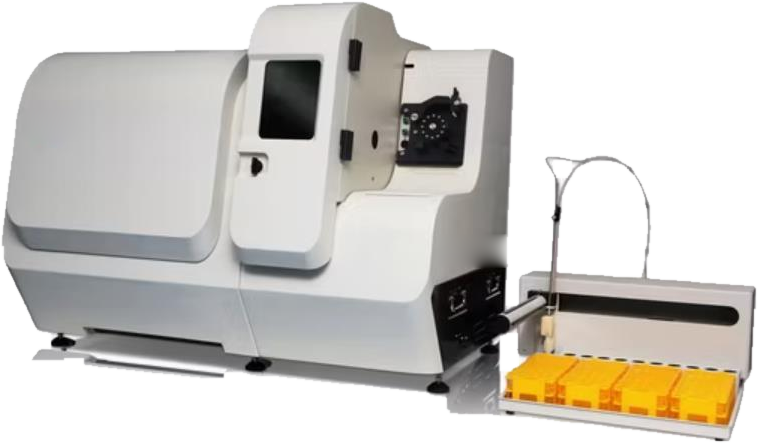
addressed by the Aeromet II tandem quadrupole mass spectrometer and
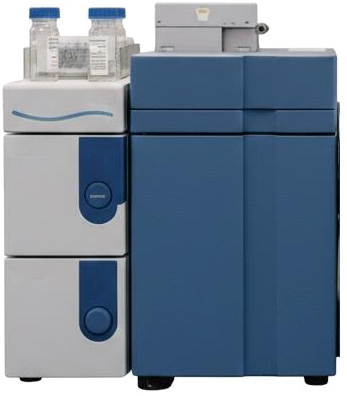
the Chromalyte modular (U)HPLC, operating under the
Spera acquisition environment.
The range extends across the complete analytical path. High-resolution accurate-mass
QTOF instrumentation supports full-scan screening, identification and structural
confirmation, while our chromatography columns address the full range of analytical
applications. Whether the requirement is small or large molecule, targeted
quantitation or open characterisation, laboratories are able to source the column,
the separation and the detection from a single manufacturer, under a single line of
accountability.
Triple quadrupole technology remains our principal area of specialisation, and our
performance is stated in published figures. Precision-engineered quadrupole filters
positioned either side of a controlled collision cell provide the MS/MS selectivity
required to resolve an analyte from its matrix. A 1 pg on-column injection of
reserpine yields a signal-to-noise ratio in excess of 700,000:1, with an instrument
detection limit below 2.0 fg. Six orders of dynamic range and 5 ms polarity
switching allow high- and low-abundance species to be determined within a single
acquisition, and mass stability is maintained below 0.1 Da over a 24-hour period.
The result is reduced sample preparation, increased screening throughput and data
that withstands regulatory scrutiny.
Systems are supplied to laboratories directly and through authorised channel
partners, including public-sector procurement, forensic science, and clinical and
diagnostic testing. Each
installation is accompanied by written undertakings: no declaration of end-of-support
within five years, OEM support for ten years from the date of installation, and a
ten-year performance guarantee on the detector, which remains valid irrespective of
the continued operation of the supplying partner.
Quality management
ISO 9001:2015 registered quality management system, audited at regular intervals by NSF-ISR.
Ten-year horizon
OEM support for ten years from the date of installation.
Method portability
Six orders of dynamic range and reproducible fragmentation patterns support the transfer of validated methods between instruments.
Installed & inspected
Technical assistance through installation and inspection, with documentary evidence at the point of verification.
Instruments
One range, from the column to the detector.
Two platforms are detailed below. The rest of the range is documented on request.
Tandem quadrupole LC–MS/MS
Aeromet II
Targeted quantitation to femtogram detection limits, across six orders of dynamic range in a single run.
A compact, highly sensitive tandem quadrupole platform. Advanced ion optics and
acquisition electronics deliver robust quantitative and qualitative analysis
across a broad range of analytes — from a single injection.
Fast Tag technology
Proprietary ionisation and detection that pulls trace-level analytes out of complex biological, environmental and pharmaceutical matrices — at low injection volumes, without losing signal fidelity.
Dynamic range optimisation
An extended linear detector response quantifies low-abundance and high-concentration species in the same run. Fewer dilutions, cleaner method transfer.
High-speed acquisition
Elevated scan rates and 5 ms polarity switching monitor many transitions at minimal cycle time — built for pharmacokinetic profiling, metabolomics and targeted proteomics.
Quantitative confidence
Precision-engineered quadrupole filters and controlled collision-cell dynamics hold fragmentation patterns and transition reproducibility steady in regulated environments.
Spera method development
Real-time visualisation, automated peak integration and customisable acquisition protocols — with dynamic switching between full-scan MS and targeted MS/MS.
700,000:1 S/N (1 pg reserpine)
2–2000 m/z mass range
32,000 MRM channels
700 °C desolvation
<0.1 Da stability / 24 h
ESI & APCI multi-mode source
Chromalyte modular stack
NexaLab Modular Series · (U)HPLC
Chromalyte
A fast liquid chromatography system engineered for high-performance separation and
versatile solvent blending — equally at home in routine testing, advanced research
and method development.
Quaternary pump & online degasser
Precise solvent management across up to four solvents, with 16 predefined gradient curves and automated priming and seal wash.
Sub-2 µm capable
High-pressure operation to 15,000 psi supports columns down to 1.7 µm particle size, with a ≤20 s inject-to-inject cycle.
Detector agnostic
UV, PDA, refractive index, evaporative light scattering and fluorescence — and a direct interface to the Aeromet II mass spectrometer.
Beyond the injector
ASAP® for direct analysis of solids, liquids and air-sensitive samples; volatile APCI for VOCs from headspace and breath; and flow-chemistry interfaces — all switchable into the same MS.
15,000 psi operating pressure
0.001–2.0 mL/min flow
≤0.002 % carryover
±0.1 °C column control
512 diode PDA
≤300 µL gradient delay
Specifications
The numbers, unabridged.
Selected specifications. The full technical dossier is in the brochure.
MS scan · Product ion · Precursor ion · Neutral loss/gain · MRM · SIM/SIR
Auto-tune / calibration
Integrated
Vacuum system
One automated vacuum pump
Data system
Spera Software
Flow system
Flow rate range
0.001 – 2.0 mL/min
Operating pressure
Up to 15,000 psi
pH range
1 – 12
Gradient delay volume
≤ 300 µL
Dwell volume
≤ 320 µL
Cycle time
≤ 20 s, inject-to-inject
Leak detection
Integrated sensors
Solvent system
Solvent capacity
Up to 4 solvents
Gradient type
Quaternary, low-pressure mixing
Predefined gradients
16 curves
Degassing
Automated vacuum system
Flow precision
≤ 0.070 % RSD
Composition accuracy
± 0.25 %
Priming & seal wash
Automated
Autosampler & columns
Injection volume
0.1 – 50.0 µL
Injection accuracy
± 0.1 µL
Injection precision
≤ 1 % RSD
Carryover
≤ 0.002 %
Sample plates
96 / 384 microtiter, or 48-position vial
Sample temp.
4.0 – 40.0 °C (± 0.5 °C)
Column compartment
2 columns · 4.0 – 100.0 °C (± 0.1 °C)
PDA detector
Wavelength range
190 – 800 nm
Wavelength accuracy
± 1 nm or better
Diodes
512
Cell volume
> 9 µL
Absorbance range
0.0001 – 2,000 AU
Baseline noise
≤ 10 × 10⁻⁶ AU
Sampling rate
80 Hz
Services
Bioanalytical services, on the platforms we build.
Method science, regulated study support and specialised bioanalysis — delivered on the
same instrumentation we manufacture, by the analysts who develop the methods.
Method science
From first principles to a transferable, validated procedure.
Full method development
Method validation
Method transfer
Regulated study support
Bioanalytical support across the development programme.
Pre-clinical animal studies
Clinical trials, Phase 1 through 4
Bioavailability studies
Bioequivalence studies
Drug–drug interaction studies
Specialised bioanalysis
Where the sample, the matrix or the analyte is the difficulty.
Metabolite screening & identification
Biomarker analysis
Protein binding studies
Microsampling — wet and dried samples
Biohazard laboratory for infectious samples
Studies are scoped individually against the analyte, the matrix and the regulatory
framework that applies.
Discuss a study
NexaLab ScientificMass Spectrometers Designed for Chemists
Brochure
The full technical dossier.
Complete feature notes and specifications for the Aeromet II tandem quadrupole mass
spectrometer and the Chromalyte modular (U)HPLC — including sensitivity data, scan
modes, flow and solvent systems, autosampler tolerances and PDA detector performance.